
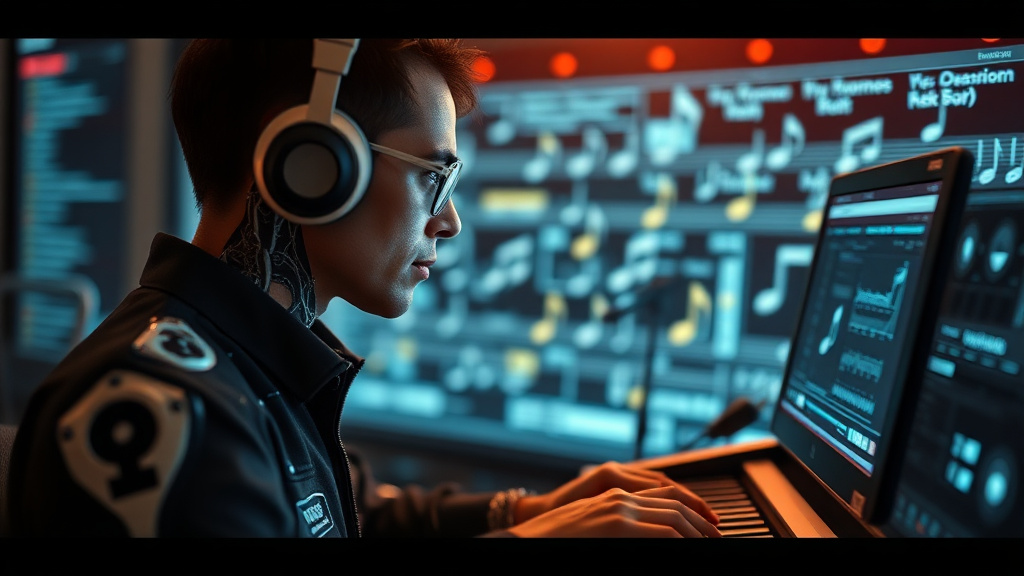
Artificial intelligence is reshaping the music industry by producing original pieces that match human creativity. From classical symphonies to modern pop songs, AI algorithms are now crafting compositions that challenge our perception of artistic expression. This article examines how machine learning models are trained on large-scale musical databases to create novel works, the technical innovations enabling this innovation, and the profound implications for musicians, composers, and the creative sector’s future worldwide.
The Growth of Artificial Intelligence-Generated Music
The rise of AI in musical composition signals a significant shift in creative industries. Sophisticated machine learning algorithms, built from extensive databases of musical pieces spanning multiple genres and centuries, have gained the ability to create new pieces with notable refinement. These systems examine patterns, structures, and stylistic elements found in established compositions to create novel pieces that maintain coherence and artistic merit. Organizations and research centers around the world are making significant investments in these systems, acknowledging its capacity to make accessible music production and broaden the possibilities of what’s musically possible.
What separates AI-generated music from earlier technological advances is its capacity to create genuinely original compositions rather than simple copies or reworkings. Machine learning models can understand complex musical theory, harmonic progression, and emotional impact, converting these aspects into new arrangements and musical lines. This ability has captured the attention of both the music sector and academic communities, igniting heated discussions about artistic creation, creative ownership, and the place of human creativity. As these systems grow more advanced, they’re beginning to challenge fundamental assumptions about the way music is made and what it means to be a composer in the digital age.
How AI Understands and Produces Musical Compositions
Artificial intelligence systems develop the ability to create music through a sophisticated process involving identifying patterns and mathematical modeling. These algorithms process large quantities of musical data, identifying underlying structures, harmonic progressions, and musical methods employed by human composers across time. By grasping these structures, AI systems can produce new arrangements that maintain musical coherence while adding innovative components. This capability demonstrates that creativity, long considered uniquely human, can be replicated and even enhanced through computational methods. The resulting compositions often display remarkable complexity and emotional resonance.
Deep Learning Systems and Machine Learning Algorithms
Deep neural networks form the foundation of contemporary artificial intelligence music composition systems. These interconnected layers of artificial neurons analyze musical content similarly to how the human brain processes sound. Recurrent neural networks, particularly those using LSTM architecture, are skilled at recognizing sequential patterns in music, such as musical sequences and harmonic structures. Transformer models have lately become prominent as effective alternatives, enabling AI to capture long-range dependencies and sophisticated connections within compositions. These architectures improve via exposure to large collections of music, adjusting internal parameters to better synthesize and output subsequent musical elements.
Generative adversarial networks constitute another breakthrough in AI musical composition. These systems leverage two rival neural networks: one generates compositions while another assesses their fidelity and authenticity. This adversarial process drives sustained advancement, pushing the generator to develop increasingly complex and realistic musical pieces. Variational autoencoders present an different method, learning compressed encodings of musical data that allow creative transformation and experimentation. Each model architecture offers distinct advantages, with researchers often integrating multiple approaches to achieve superior composition quality and greater musical diversity.
Training Information and Music Patterns
The caliber and range of training data critically influence an AI system’s creative capabilities. Researchers assemble comprehensive datasets encompassing classical symphonies, jazz standards, contemporary pop songs, and world music traditions. These datasets include millions of musical pieces in various formats, including MIDI files, sheet music, and audio recordings. The scope of such training content enables AI systems to recognize universal musical principles while acknowledging genre-specific conventions and stylistic nuances. Larger, more diverse datasets typically yield more adaptable and artistically dynamic compositions that transcend simple pattern imitation.
AI systems identify recurring patterns within music datasets, understanding rules shaping melody, harmony, rhythm, and structure. These patterns comprise harmonic progressions, cadence patterns, rhythmic patterns, and instrumentation methods that characterize different musical traditions. Machine learning algorithms detect mathematical connections between musical elements, comprehending how certain note sequences typically come after one another and how different instrumental voices work together. By mastering these patterns, AI can create compositions that feel authentic and purposeful rather than random. This pattern-recognition method enables the creation of cohesive, emotionally compelling works that honor musical conventions while adding innovative elements.
Challenging Conventional Approaches to Music Making
Artificial intelligence fundamentally transforms conventional music creation by removing the requirement for skilled musicians to generate original works. AI systems analyze patterns from vast musical databases, learning the underlying structures, harmonic progressions, and musical traditions that define musical genres. This ability questions the popular belief that composing music requires inherent human talent, profound feeling, and years of formal training. Instead, algorithms demonstrate that music-making can be structured, mastered, and replicated through data-driven approaches. The implications are profound, compelling musicians and producers to reconsider what defines creative expression in an age of machine-generated compositions.
The rise of AI composers poses critical questions about authorship, originality, and the value of human artistic contribution in music. Established models depicted composers as solitary geniuses channeling inspiration into masterpieces, yet AI systems operate without consciousness or emotion, creating music through mathematical processes. This shift makes accessible music creation, enabling individuals without formal training to compose professional-quality compositions in real time. However, it at the same time undermines traditional professional trajectories and prompts questions about copyright, artistic integrity, and whether AI-created compositions possesses genuine creative merit or merely replicates existing patterns in new arrangements.
- AI questions the concept of music authorship and creative ownership
- Algorithmic systems alters conventional composer career paths and employment models
- Algorithmic composition makes accessible music creation for non-professional creators
- Issues surface about creative authenticity against machine pattern recognition
- Copyright and intellectual property structures demand significant overhaul
